Bangalore City Guide
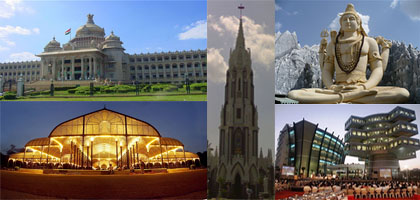
Bangalore, the capital city of Karnataka, is a veritable melting pot of various races and cultures. This Garden City has well - laid out parks, gardens, long avenues of blossoming trees and salubrious climate.Myth has it that Bangalore got its name from a humble meal of boiled beans, which a lost and famished king of the Vijaynagar empire, received at the hands of a kind woman. The king called the place Bendakaalu ooru. In Kannada (local language) "Benda kaalu" means boiled beans, "Ooru" means village. Bendakaalooru eventually became Bengalooru, and in English, Bangalore.
Places of Interest in Bangalore
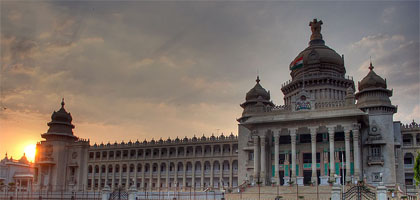
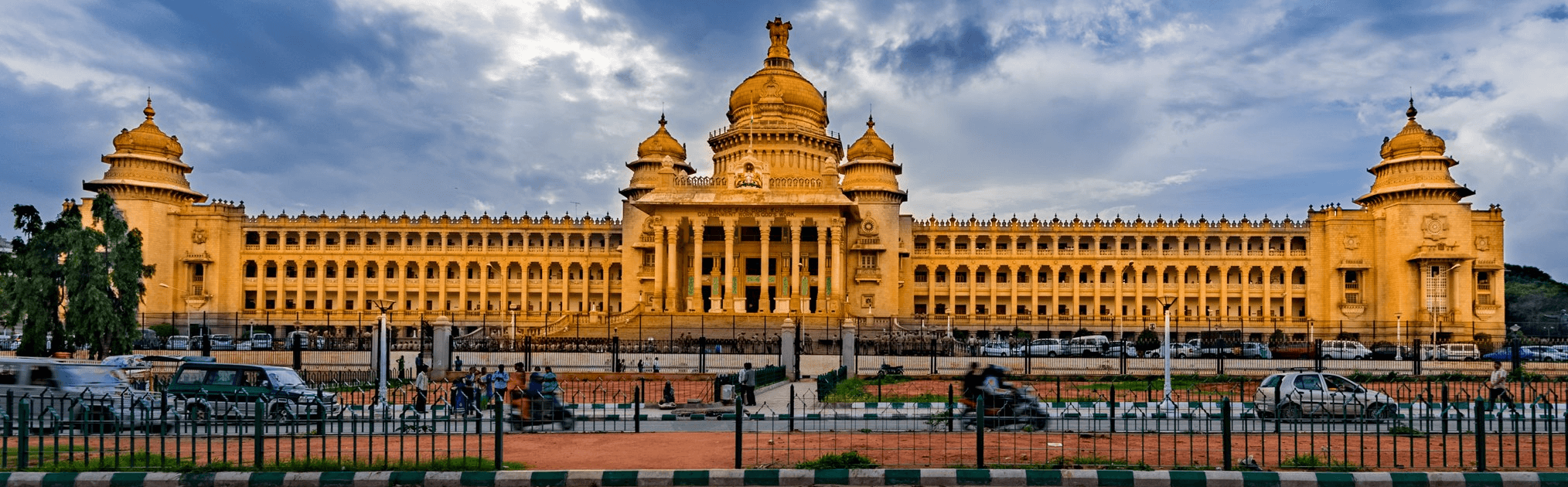
Vidhana Soudha
The Vidhana Soudha, located in Bengaluru (Bangalore), is the seat of the state legislature of Karnataka. It is an imposing building, constructed in a style sometimes described as Neo-Dravidian, and incorporates elements of Indo-Saracenic and Dravidian styles. The construction was completed in 1956.Kengal Hanumanthaiah is credited with the conception and construction of the Vidhana Soudha, . The foundation was laid by the then Prime Minister of India, Jawaharlal Nehru, on July 13, 1951. However it was Kengal Hanumanthaiah who was instrumental in the redesign and speedy construction of Vidhana soudha.
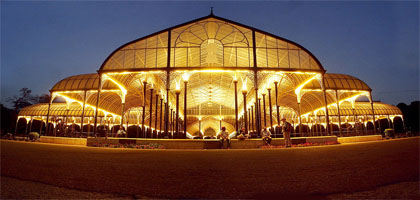
Lal Bagh
Lal Bagh or Lal Bagh Botanical Gardens, meaning The Red Garden in English, is a famous botanical garden in southern Bangalore, India. The garden was originally commissioned by Hyder Ali, the ruler of Mysore, and later finished by his son Tipu Sultan. It has a famous glass house which hosts an annual flower show. Lal Bagh houses India's largest collection of tropical plants, has an aquarium and a lake, and is one of the main tourist attractions in Bangalore. Hyder Ali commissioned the building of this garden in 1760 but his son, Tipu Sultan, completed it.
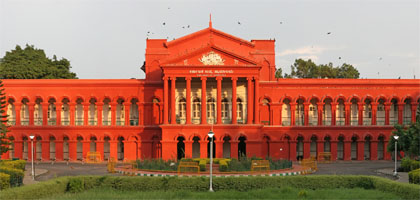
Karnataka High Court
The Karnataka High Court is the High Court of the Indian state of Karnataka. It is located in Bangalore, the capital city of Karnataka. The High Court functions out of a red brick building known as Attara Kacheri. It is in front of Vidhana Soudha, which is the seat of the legislature of Karnataka.The history of the Karnataka High Court can be traced back to the year 1884 when the Chief Court of Mysore was created with three judges and was designated as the highest court of appeal, reference and revision in the State of Mysore, the earlier name of Karnataka.
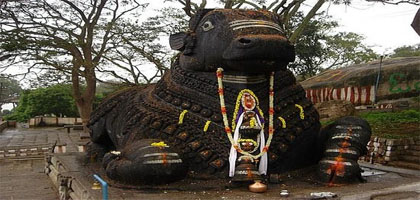
Bull temple
The Bull temple of Bangalore is dedicated to Nandi Bull, the vahana (vehicle) of Lord Shiva. Situated in Basavanagudi, this temple has been built in the Dravidian style of architecture. Kempe Gowda, the founder of Bangalore, got the Bull temple built during his time. This temple counts amongst the oldest temples of the city and draws devotees from all over the country. Read on to know more about the Bull Temple of Bangalore, India. There is huge idol of Nandi Bull inside the temple, measuring 4.5 m in height and 6.5 m in length. This idol is said to have been carved out of a single rock.
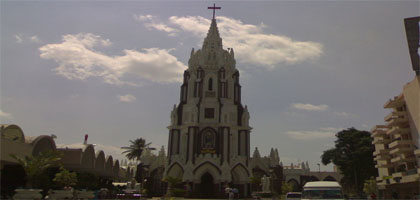
St. Mary's Basilica
St. Mary's Basilica is a basilica located in the Archdiocese of Bangalore in the Indian state of Karnataka. It is the oldest church in Bangalore and is the only church in the state that has been elevated to the status of a minor basilica.[1][2] It is famous for the festivities held during the St. Mary's Feast in the month of September each year, an event that attracts a number of devotees from in and around Bangalore.Bangalore was not a big city those days when Christianity entered Srirangapattana the capital city of the then Mysore province in the year 1648.
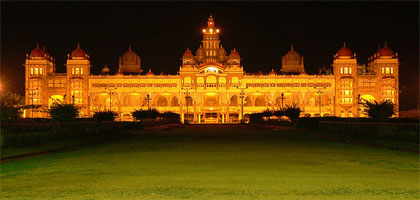
Mysore Palace
The Palace of Mysore or the Amba Vilas Palace is a palace situated in the city of Mysore in southern India. It is the official residence of the Wodeyars - the erstwhile royal family of Mysore, and also houses two durbar halls (ceremonial meeting hall of the royal court).Mysore is commonly described as the City of Palaces, however, the term "Mysore Palace" specifically refers to one within the old fort. The Wodeyar kings first built a palace in Mysore in the 14th century,it was demolished and constructed multiple times. The current palace construction was commissioned in 1897, and it was completed in 1912 and expanded later around 1940.
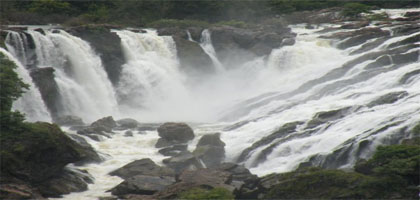
Shivanasamudra Falls
Shivanasamudra is a small town in the Chamarajanagar District of the state of Karnataka, India. It is situated on the banks of the river Kaveri and is the location of one of the first Hydro-electric Power stations in Asia, which was set up in the year 1902. The Shivanasamudra Falls is on the Kaveri River after the river has wound its way through the rocks and ravines of the Deccan Plateau and drops off to form waterfalls. The island town of Shivanasamudra divides the river into twin waterfalls. This creates the fourth largest island in the rivers course. A group of ancient temples are located here and there likely was a village.
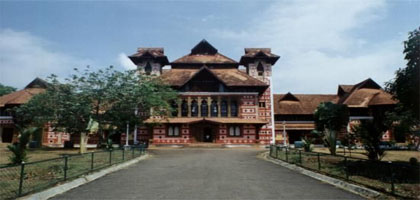
Government Museum
The Government Museum of Bangalore counts amongst the oldest museums in India. It is located at the Kasturba Gandhi Road, quite near to the magnificent Cubbon Park. Colonel Sankey designed the main building of the Government museum and got it constructed in the year 1876. Later, a number of wings were added to the main building. Bangalore Government was opened up for public viewing in the year 1886 only. The Government Museum of Bangalore comprises of two exhibition floors, which have been further divided into eighteen galleries.
Bangalore Yellow Pages Categories
Important Directories
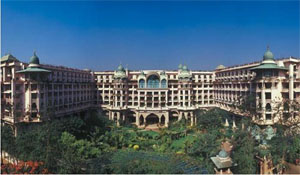
Bangalore : Hotel & Restaurant Directory
Bangalore is located on the Deccan plateau and lies on the south eastern part of Karnataka.Bangalore is the capital city of Karnataka. Bangalore is Asia's one of the fastest growing cosmopolitan city.This cosmopolitan city is home to the most high tech industries and India's some of the premier scientific establishments. The city of Bangalore is well laid out and attracts tourists with a number of gardens & parks, architectural landmarks, natural lakes, shopping malls, restaurants and pubs. Bangalore is often referred to as the Silicon Valley of India.
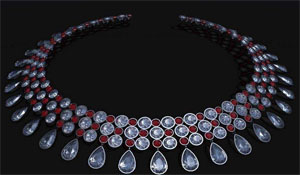
Bangalore : Gems & Jewellery Directory
Bangalore, the jewellers take their business very seriously, some having met the demands of their customers for many generations while others now joining them to get a stake of the market share. From wedding sets to contemporary platinum singles the jewellers have done it all.No woman can resist the allure of a piece of jewellery. There is nothing more beautiful, more elegant or more coveted than the perfectly-crafted piece of gold, encrusted with flawless gems. Gold will always be precious, diamonds are forever and jewellers will eternally be in business.
Bangalore : IT/ITES/BPO Directory
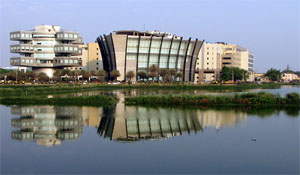
Bangalore is called the Silicon Valley of India because of the large number of information technology companies located in the city. Bangalore's IT industry is divided into three main clusters Software Technology Parks of India (STPI); International Tech Park, Bangalore (ITPB); and Electronics City. UB City, the headquarters of the United Breweries Group, is a high-end commercial zone. Infosys and Wipro, India's second and fourth largest software companies are headquartered in Bangalore, as are many of the global SEI-CMM Level 5 Companies.
Bangalore : Real Estate Directory
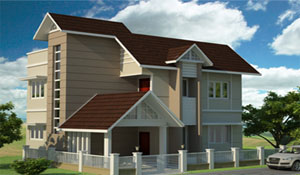
Bangalore's a Cosmopolitan city with growing migrant population is all setting a high demand for real estate. It's not only the techies who have generated this new wave but also the migrant population coming in search of entrepreneurial opportunities. The depression is agricultural sector is forcing people to find other means for survival. This is the reason for increase in migration.The growth in IT and ITES sector continues to drive the demand for office space. Large investors focus on office/residential as opportunities are investor friendly than retail sector. Vacancy level in office space is declining.
Bangalore Latest Classifieds
{{ classified.classifiedDescription }}
Category: {{ classified.categoryName }}